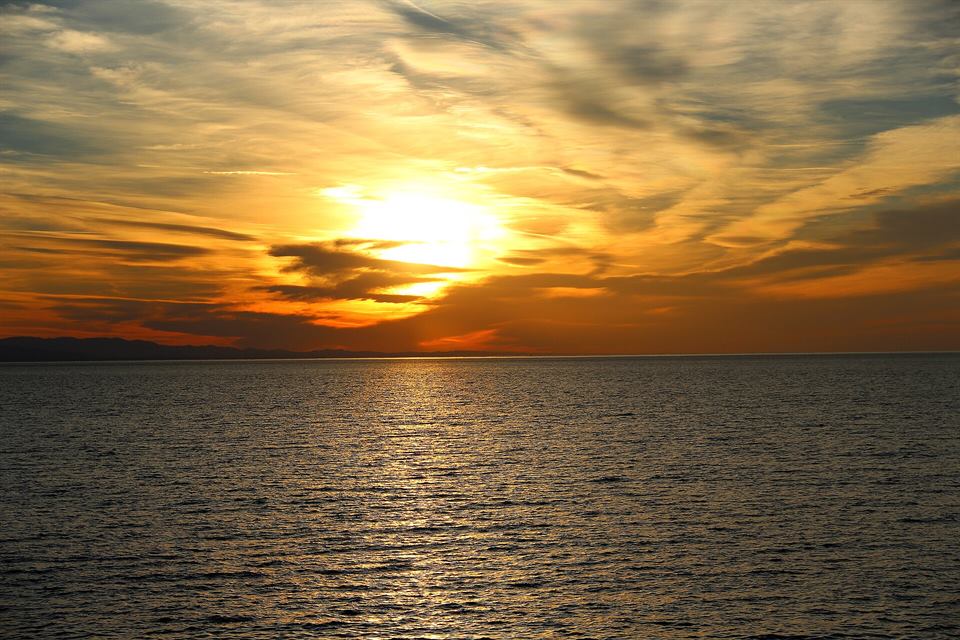
Akçakoca is Düzce province's only district on the Black Sea coast. Almost exactly halfway between Istanbul and Ankara, it is about three hours from both. It is known for its 38 km of coast, green hillsides covered in hazelnut orchards, the Genoese Castle and its sunsets; locals call it "the Pearl of the Black Sea".
Akçakoca at a glance
| Province | Düzce (since 1999; before that Bolu) |
|---|---|
| Population | District 40,025, town centre 27,878 (TurkStat, 2022) |
| Coastline | 38 km |
| Location | 41° 05′ N, 31° 07′ E · Sakarya to the west, Zonguldak to the east |
| Distances | Düzce city centre 37 km · Istanbul (Kadıköy) 223 km · Ankara (Kızılay) 273 km |
| Postcode | 81650, 81652 |
| Telephone area code | 0380 |
| Economy | Tourism, hazelnuts, fishing; natural gas platforms offshore |
| Products with geographical indication | Mancarlı pide, melengüççeği, yellow hazelnut, Kaplan Dede chestnut |
Where does the name come from?
Historically the town was known as Akçaşar and Akçaşehir. According to tradition, the Kerameddin clan who settled here called it "Akçaşar" because it looked bright white from the sea. In 1934 the district was named after Akçakoca Bey, one of Orhan Gazi's commanders, remembered for bringing the region into the Ottoman lands.
A short history
- AntiquityAkçakoca was the town of Diapolis, the port of Prusias ad Hypium (today's Konuralp). A Roman building near the castle was in use from the 1st to the 5th century AD.
- 13th centuryIn the Latin period after 1204 the castle now known as the Genoese Castle was in use; the region returned to Byzantium in 1261.
- Early 14th centuryThe region is considered to have joined the Ottoman lands in the time of Akçakoca Bey. According to tradition, the nail-free mosque in Çayağzı dates from the reign of Orhan Gazi.
- After 1877–78After the Russo-Turkish War, Hemshin, Circassians, Abkhaz, Georgians and Laz settled in the region, followed later by Albanians and Bosniaks from the Balkans.
- 1929Orhangazi Primary School opened; the writer Rıfat Ilgaz taught here.
- 1934The town took the name Akçakoca.
- 1950sSeaside and caravan tourism began and a tourism association was founded. Before the Aegean and Mediterranean were discovered, Akçakoca was one of the first places in Turkey where tourism began.
- 1980sCaravans kept arriving by road from Europe; the number of foreign tourists was high.
- 1993A wooden bust of Lenin was found in the sea off the Ceneviz Kale beach; years later its story inspired a film. The story of the Lenin statue
- 1999When Düzce became a province, Akçakoca was separated from Bolu and joined Düzce.
- 2026The Genoese Castle, Women's and Martı beaches received the Blue Flag.
One of Turkey's first tourist destinations
According to an oral history study with living witnesses at Düzce University, Akçakoca's tourism potential was noticed in the late 1940s. The tourism association founded in the 1950s welcomed visitors and organised bus services from Istanbul. When the hotels were full, locals opened their homes to tourists; it is said that young people carried tourists' suitcases for free. The singer Zeki Müren is said to have come often, Fenerbahçe football club held training camps here, and Turkish cinema shot films here.
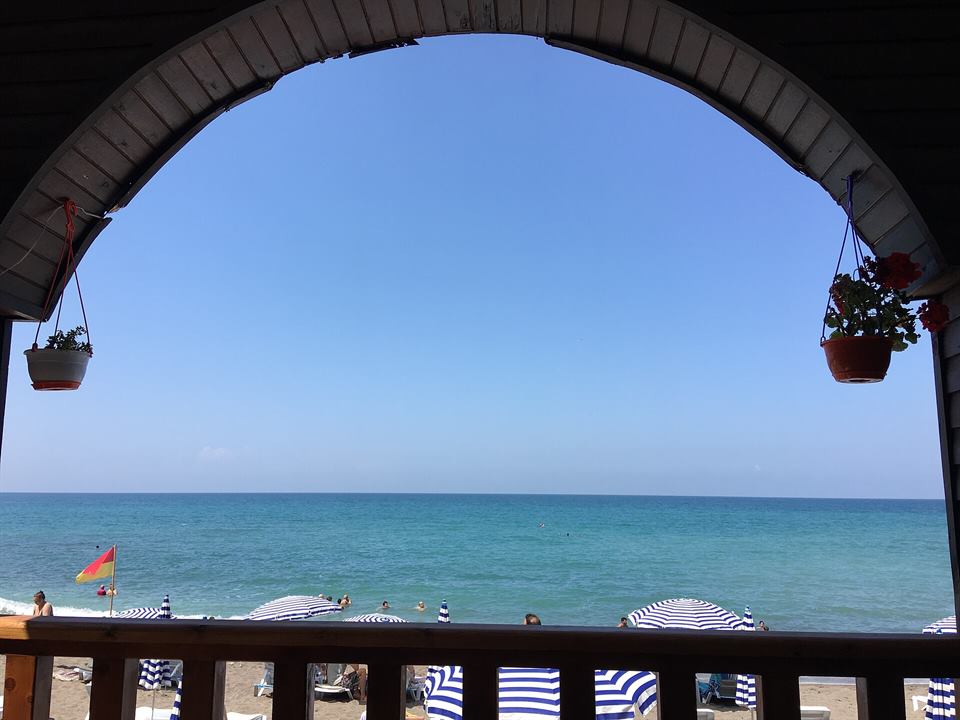
Photo: Iemizrak · CC BY-SA 4.0
A multicultural town
Akçakoca is a small town, but its villages carry the traces of different cultures; eight different languages are said to be spoken in the district.
| Manav Turks | The local people. The villages of Dadalı, Koçar, Arabacı, Kınık, Kepenç, Çayağzı and Yukarı Mahalle. Çantı mosques, pastries, melengüççeği. |
|---|---|
| Hemshin | The villages of Hemşin and Yenice. Tulum bagpipe and horon dance; the Hemşin pear. |
| Circassians and Abkhaz | The villages of Esmahanım, Dilaver and Davutağa. Circassian cheese, haluj (Circassian dumplings), Abaza chicken. |
| Laz | Kemençe fiddle and tulum bagpipe at weddings. |
Source: Düzce Governorship, Akçakoca Ethnographic Culture Inventory (2010).
Nature
Mount Kaplan Dede, rising behind the district, is about 1,160 m high. Its slopes are covered in hazelnut orchards and hornbeam, beech and oak forest (218,000 decares of hazelnut orchards and 170,000 decares of forest in 2010). The steep cliffs carved by the waves along the coast are locally called "yalıyar"; the highest are the roughly 30 m Soyat cliffs between the Genoese Castle and Değirmenağzı.
Where to start?
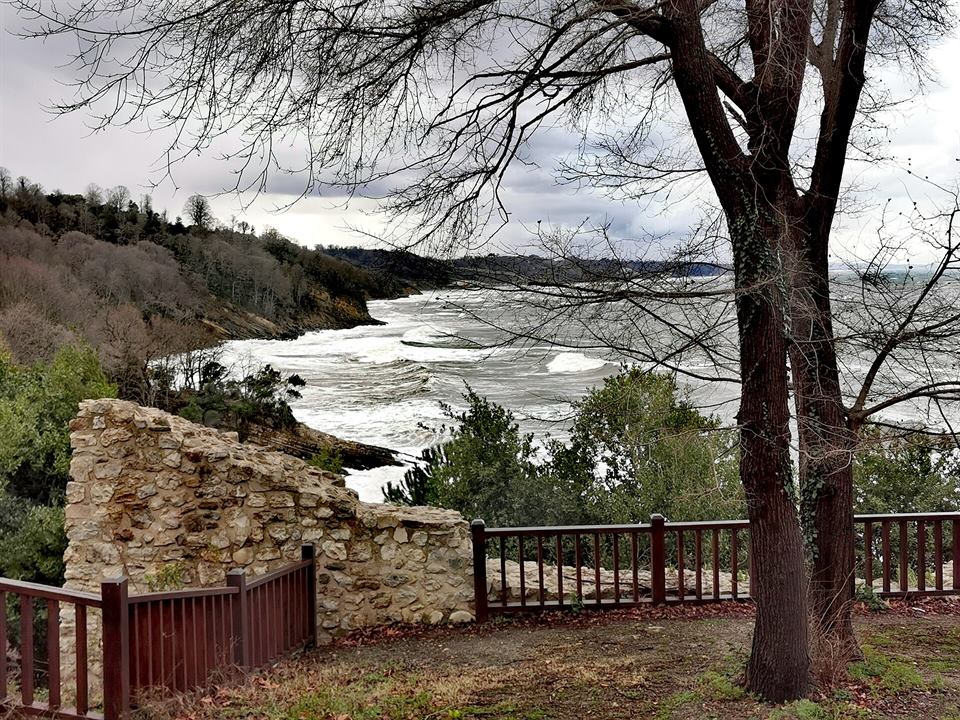
Genoese Castle
A historic castle on a cliff jutting into the sea between two coves, the symbol of Akçakoca.
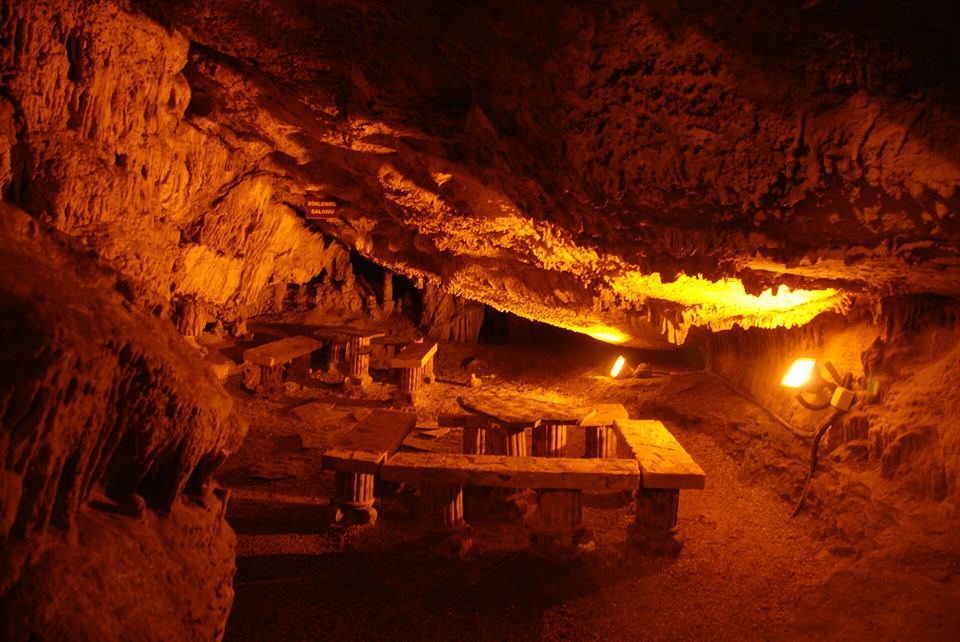
Fakıllı Cave
350 m of the 1,017 m cave is lit; stalactites, stalagmites and dripstone "white rooms".
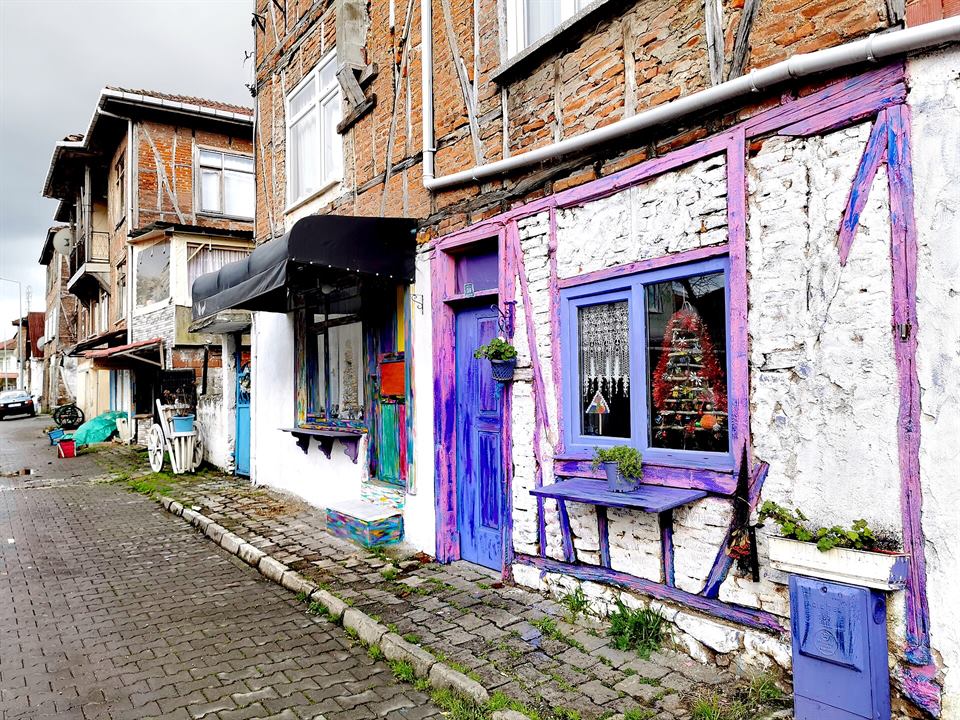
Historic houses of Yukarı Mahalle
A protected historic quarter in Akçakoca's oldest neighbourhood, lined with 150–200-year-old houses with bay windows.
Frequently asked questions
Where is Akçakoca and which province is it in?
Akçakoca is the only district of Düzce province on the Black Sea coast. It is 37 km from Düzce city centre. Until Düzce became a province in 1999, it belonged to Bolu.
What is the population of Akçakoca?
According to TurkStat's 2022 data, the district has 40,025 inhabitants and the town centre 27,878. On summer weekends the town's population doubles or triples.
What are Akçakoca's postcode and telephone area code?
Akçakoca's postcodes are 81650 and 81652, and its telephone area code is 0380.
What is Akçakoca famous for?
It is known for its 38 km of coast, the Genoese Castle, Aktaş Waterfall, Fakıllı Cave, historic wooden mosques built without nails, hazelnut orchards, and mancarlı pide and melengüççeği with geographical indication. Three of its beaches received the Blue Flag in 2026.
What was Akçakoca's old name?
Historically the town was known as Akçaşar and Akçaşehir; it took the name Akçakoca in 1934. In antiquity there was a port town here called Diapolis.